Vertebroplasty / Kyphoplasty
Vertebroplasty and kyphoplasty are minimally invasive procedures used to treat painful spinal fractures, commonly caused by osteoporosis or trauma. These procedures help stabilize the fractured vertebra and provide rapid pain relief.
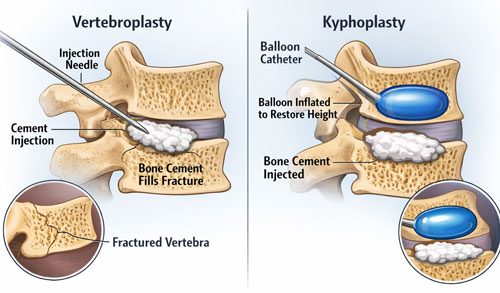
Both techniques involve injecting medical-grade cement into the affected vertebra, while kyphoplasty also uses a small balloon to restore vertebral height before cement injection.
Common Conditions Treated
These procedures are recommended for:
- Osteoporotic compression fractures
- Spinal fractures due to trauma
- Fractures caused by tumors or infections
- Severe back pain due to vertebral collapse
Symptoms
You may experience:
- Sudden or severe back pain
- Pain worsening with movement or standing
- Limited mobility
- Height loss or spinal deformity (in severe cases)
Procedure Overview
The procedures are performed using minimally invasive techniques:
- Small needle insertion into the affected vertebra
- Injection of bone cement to stabilize the fracture
- In kyphoplasty, balloon inflation to restore height before cement placement
- Procedure usually completed within a short duration
Benefits
These treatments offer several advantages:
- Immediate or rapid pain relief
- Minimally invasive with no major surgery
- Quick recovery and early mobility
- Improved spinal stability
- Reduced risk of further complications
Recovery & Care
Recovery is usually fast and comfortable:
- Walking may begin within a few hours
- Short hospital stay or daycare procedure
- Gradual return to normal activities
- Management of underlying osteoporosis if present
The goal of treatment is to stabilize the fracture, relieve pain quickly, and restore mobility for a better quality of life.
FAQs
Vertebroplasty involves direct cement injection, while kyphoplasty uses a balloon to restore height before injecting cement.
Yes, they are safe and widely performed with high success rates and minimal complications.
Many patients experience significant pain relief within hours to a few days after the procedure.
These are usually daycare or short-stay procedures depending on the patient’s condition.