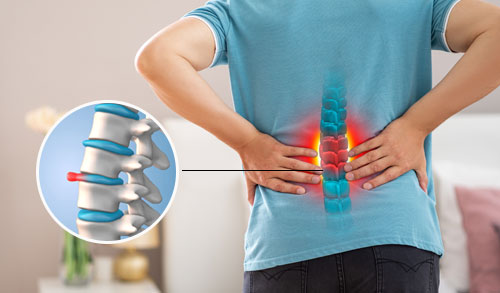
Slipped Disc
A slipped disc, also known as a herniated or prolapsed disc, is a common spine condition that occurs when the soft cushion (disc) between the bones of the spine moves out of its normal position. This can put pressure on nearby nerves, causing pain and discomfort.
It can affect the neck (cervical spine) or lower back (lumbar spine) and may lead to symptoms like radiating pain, numbness, or weakness in the arms or legs. Early diagnosis and proper treatment can help manage the condition effectively and prevent complications.
Common Causes
A slipped disc can occur due to:
- Age-related wear and tear of spinal discs
- Sudden strain or heavy lifting
- Poor posture and long sitting hours
- Injury or trauma to the spine
- Weak back muscles and lack of exercise
Symptoms
You may experience:
- Back or neck pain
- Pain radiating to arms or legs (sciatica)
- Numbness or tingling sensation
- Muscle weakness
- Difficulty in movement or sitting for long time
Treatment Approach
Most cases of slipped disc can be treated without surgery. Treatment options include:
- Medications to relieve pain and inflammation
- Physiotherapy and guided exercises
- Posture correction and lifestyle changes
- Pain management procedures like injections
In cases where symptoms are severe or do not improve with conservative treatment, minimally invasive or endoscopic spine surgery may be recommended. These procedures involve smaller incisions, less pain, and faster recovery.
Benefits of Early Treatment
Early diagnosis and treatment can help:
- Relieve pain quickly
- Prevent nerve damage
- Avoid worsening of the condition
- Improve mobility and daily function
Simple Prevention Tips
You can reduce the risk of slipped disc by:
- Maintaining proper posture
- Avoiding heavy lifting or incorrect lifting techniques
- Staying physically active
- Strengthening back and core muscles
- Taking breaks during long sitting hours
The goal of treatment is to relieve pain, reduce nerve pressure, and restore normal movement, helping you return to a comfortable and active life.
FAQs
A slipped disc occurs when the soft inner part of a spinal disc bulges out and presses on nearby nerves.
Yes, most cases improve with medications, physiotherapy, and lifestyle changes without surgery.
Recovery time varies, but most patients improve within a few weeks with proper treatment.
Surgery is considered only when pain is severe, persistent, or associated with nerve weakness and does not improve with other treatments.