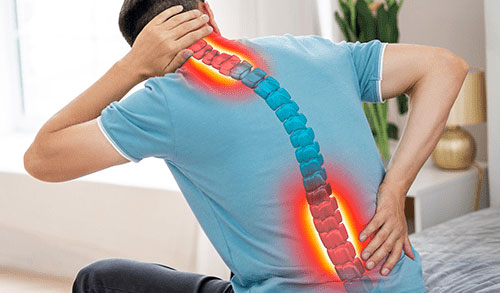
Spondylosis
Spondylosis refers to age-related wear and tear of the spine, affecting the discs, joints, and bones. It commonly occurs in the neck (cervical) and lower back (lumbar) regions and is a frequent cause of chronic pain and stiffness.
As the spine degenerates over time, it may lead to reduced flexibility, discomfort, and sometimes nerve compression. Early diagnosis and proper care can help manage symptoms and maintain an active lifestyle.
Common Causes
Spondylosis can develop due to:
- Age-related degeneration of spinal discs
- Wear and tear of joints and ligaments
- Poor posture over long periods
- Repetitive strain or heavy physical work
- Lack of exercise and weak core muscles
Symptoms
You may experience:
- Neck or lower back pain
- Stiffness and reduced flexibility
- Pain radiating to arms or legs
- Numbness or tingling sensation
- Muscle weakness in severe cases
Treatment Approach
Treatment focuses on relieving pain and improving mobility. Most cases can be managed without surgery through:
- Pain relief medications
- Physiotherapy and strengthening exercises
- Posture correction and ergonomic changes
- Lifestyle modifications
In cases with nerve compression or severe symptoms, minimally invasive spine procedures may be recommended to relieve pressure and improve function.
Benefits of Early Treatment
Early care can help:
- Reduce pain and stiffness
- Prevent worsening of degeneration
- Improve flexibility and movement
- Avoid complications like nerve damage
Simple Prevention Tips
You can reduce the impact of spondylosis by:
- Maintaining good posture
- Staying physically active
- Strengthening core and back muscles
- Avoiding prolonged sitting or strain
- Using ergonomic furniture
The goal of treatment is to relieve pain, improve mobility, and support long-term spine health.
FAQs
Spondylosis is age-related wear and tear of the spine that affects discs, joints, and bones.
It is common with aging and usually manageable, but severe cases may cause nerve compression.
Yes, most cases improve with medications, physiotherapy, and lifestyle changes.
Maintaining good posture, regular exercise, and a healthy lifestyle can help reduce the risk.