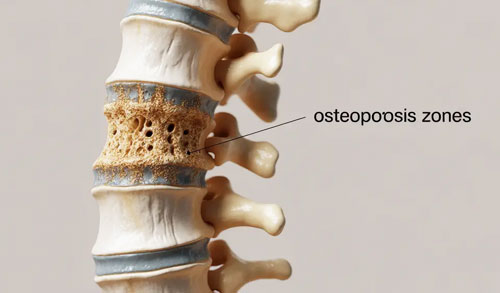
Osteoporosis
Osteoporosis is a condition in which bones become weak and fragile, making them more prone to fractures even with minor falls or injuries. It commonly affects older adults, especially women, but can occur in anyone.
This condition often develops silently over time without noticeable symptoms until a fracture occurs. Early detection and proper management are important to maintain bone strength and prevent complications.
Common Causes
Osteoporosis can occur due to:
- Age-related bone loss
- Hormonal changes (especially after menopause)
- Calcium and vitamin D deficiency
- Lack of physical activity
- Long-term use of certain medications
Symptoms
Osteoporosis may not show early symptoms, but you may notice:
- Back pain due to weakened bones
- Loss of height over time
- Stooped posture
- Frequent fractures with minor injuries
Treatment Approach
Treatment focuses on strengthening bones and preventing fractures. It may include:
- Medications to improve bone density
- Calcium and vitamin D supplements
- Weight-bearing exercises
- Lifestyle changes and diet improvement
In cases where fractures occur, appropriate medical or surgical treatment may be required to stabilize the affected area and restore function.
Benefits of Early Treatment
Early management helps:
- Reduce the risk of fractures
- Maintain bone strength
- Improve posture and mobility
- Enhance overall quality of life
Simple Prevention Tips
You can reduce the risk of osteoporosis by:
- Maintaining a calcium-rich diet
- Getting adequate vitamin D
- Exercising regularly
- Avoiding smoking and excessive alcohol
- Regular health check-ups
The goal of treatment is to strengthen bones, prevent fractures, and maintain an active and healthy lifestyle.
FAQs
Osteoporosis is a condition where bones become weak and fragile, increasing the risk of fractures.
Older adults, especially women after menopause, and individuals with poor nutrition or low physical activity are at higher risk.
Yes, a healthy diet, regular exercise, and proper intake of calcium and vitamin D can help prevent osteoporosis.
It is usually diagnosed through bone density tests along with clinical evaluation.